Saturday, December 9, 2017

Review: Three Billboards Outside Ebbing, Missouri

As viewers delve into Martin McDonagh’s fourth feature, a grim and saddening world is revealed. While similar to the dark humor in his previous films, McDonagh builds upon a story which focuses on the hope and drive of main character Mildred Hayes, after her daughter’s murder. Beginning seven months after the crime, the police station of Ebbing, Missouri has grown lethargic in regards to catching the perpetrator. This is what leads Hayes to rent three billboards outside the town, after having been unused for many decades prior. In her words: “The more you keep a case in the public eye, the better your chances are at getting it solved.” These billboards, an eccentric and extreme form of protest, do just that. Mildred’s attempts to disturb the townspeople are effective, leading to a series of torment against her. McDonagh develops this story into that which makes Three Billboards his most human film.
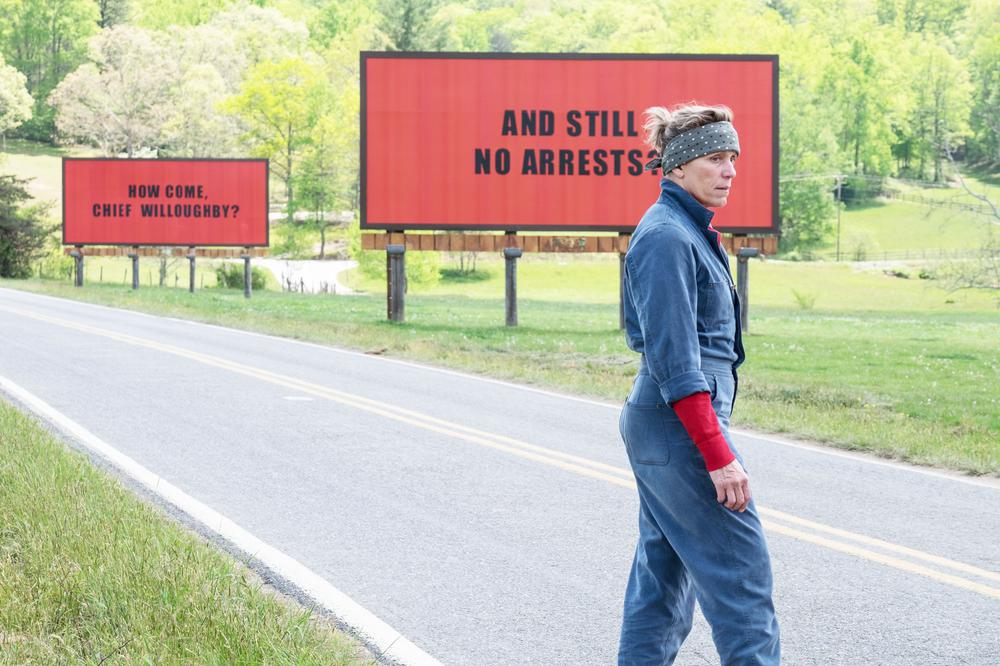
Events throughout the timeline of the story, unpredictable and alarming, present themselves in a sincere and brazen manner. Not in a very long time have I been so emotionally affected by a film, which does not fail to get its point across. Depicting many real-world concerns, such as racism, police-torment, and straightforward insensitivity amongst people, it’s shocking to know it was written eight years ago. McDonagh has created a truly compelling, endearing, and enduring character through Hayes, which is, without a doubt, one of the strongest female characters I have seen in my life. Frances McDormand brings this character to its utmost manifestation, working  marvellously in unison with her fellow actors, while still pushing her role to act against them.

Each character in the story goes through such extreme development, written with such intricacy and focus, that nearly every one possesses a characteristic with which its audience can feel for. McDonagh drags his antagonists through mud puddles before cleaning them and hanging them out to dry, which is what makes them so alluring. In the beginning of the story, you are meant to assume the cops are the villains, he is very clear in that regard. He elaborates on this through many instances where these officers showcase fearful habits, before taking each through a heavy realization. Every person in the script has a very established role, and succeed in giving the audience a different moral through their perspective.


Three Billboards Outside Ebbing, Missouri is a story about grief and human tendencies following happenings of tragedy. Martin Mcdonagh has written a fictional masterpiece, causing those to question how we truly regard narratives. This film speaks truths beyond those which are anticipated, making it my favorite film of the year.


Sunday, September 3, 2017

Review: Swim Team

"When I'm swimming, I feel normal."

That's the first thing we hear from Mikey McQuay, a boy with autism who swims for the Jersey Hammerheads. And so begins director Lara Stolman's documentary, SWIM TEAM, a touching account of the struggles and achievements of a swim team in Perthy Amboy, NJ, comprised of kids with autism. Coach Mike McQuay (the previously mentioned Mikey's father) and his wife, Maria, started the team when they realized how important a skill like swimming can be for those with autism - not only in emergency scenarios, but also to fuel the kids' passion and sense of accomplishment.

The story closely follows three athletes - Mikey, a senior in high school who loves animals and is going to graduate from high school soon; Robbie Justino, a boy who thrives in the water and with leadership but doesn't know yet that he has autism; and Kelvin Truong, who also battles with Tourette's Syndrome -- physical and vocal tics that interfere with his everyday life -- and anger management tied in with the frustration of not being able to control these tics.

The documentary is a beautiful chronicle of these boys' lives. With a condition like autism, it is common for these teenagers to feel like outcasts, but the team brings them together and encourages them that they can achieve what they want to. And not only is the team an encouragement to its teammates, but it is also a source of hope, for the community and for those with similar disorders who strive to push themselves in life.

In many documentaries, it can feel like people are trying to force their personality on the camera; in this case, there is none of that. The teammates of the Jersey Hammerheads have no interest in trying to control the way they end up on screen, and that is the beauty of a story like this: in any other case, we would see projections of who they want to be, but here, with a group of kids with developmental disabilities, we see them for who they are. Stolman is not afraid to show the team's losses alongside their victories - there are mistakes made along the way, and discouragements, but the film makes it clear that this isn't about winning - it's about life.

SWIM TEAM is now playing at Midtown Cinema! Don't miss this heartwarming story!

Sunday, August 20, 2017

Review: Step

"We're making music with our bodies. That's slick!"

So says Blessin Giraldo in Amanda Lipitz's new film, STEP. The documentary follows the "Lethal Ladies" of the Baltimore Leadership School for Young Women, a step team at a school which in its founding year, vowed to get all 120 girls in its class accepted into college. Led by Coach G, the team takes success to new levels, working hard at school and hoping to win the competition at the end of the year before they graduate.

The documentary first begins back in 2015, in a Baltimore shaken by the death of Freddie Gray. With the recent events happening in the US, the documentary could not have inadvertently chosen a more perfect time to be released... As America continues to be weighed down by issues of racism and hate, never has step had more power for these ladies. Step, as the film so adamantly affirms, is about spirit in adversity, pushing forward and being united even if the walls are falling down around you. Whether those walls are a metaphor for what is happening in society, or in the girls' own home, it is a powerful message.

The film introduces 3 students as the focus of the documentary: Blessin Giraldo, Cori Grainger, and Tayla Solomon. Blessin is the charismatic one of the group, though she struggles to believe in herself; Cori is the quiet, earnest girl, hoping to get a full ride to Johns Hopkins University; and Tayla brings the attitude, and is constantly embarrassed by her mother's exuberant presence at step practices.

Despite these insights into the girls' lives, the short length of the documentary prevents us from really delving too deep into their stories -- we see enough about them to feel proud for them as they prepare for competition and college, but it can really only stay at a superficial level. Instead, the film focuses its 84 minutes of screen time on societal themes through these students' journeys, like overcoming adversity and being all that you can be. The film certainly lives up to its feel-good status in this regard. Perhaps with another half hour of content, it could have landed even more.


Nonetheless, STEP is a wonderful film, brief but powerful. Now playing at Midtown Cinema!

Sunday, July 23, 2017

Review: Lost in Paris

LOST IN PARIS: the title suggests a travel movie, but that is the most excitement you would expect. But Fiona Gordon and Dominique Abel have really brought spice to such a simple title. Perhaps it's the chemistry that the writer/director/actor duo has brought to the project: not only are they partners in life, but partners in art and comedy, and it translates to the screen beautifully.

This dynamic duo has created a quaint, awkwardly hilarious film based in physical comedy -- every second will either have you laughing out loud or grinning in delight. The majority of the film takes place in -- you guessed it -- Paris, but with little dialogue, the story proves to be pretty universal, simply depicting a lost traveler, her smitten new acquaintance, and her addled aunt.

Fiona (Fiona Gordon) lives in a blustery, snow-covered village in Canada. Ever since her aunt Martha (Emmanuelle Riva) moved there when she was little, she has wanted to go to Paris. And she finally gets her chance when, about 40 years later, her aunt sends a cry for help in the form of a ragged, trash-soaked letter, worried that she will be put in a nursing home.

Fiona journeys to Paris to help her aunt, but once she gets there, Aunt Martha is nowhere to be found. A fall in the river causes Fiona's backpack to get lost downstream, including her purse and passport. Dom (Dominique Abel), an earnest homeless man with a tendency for lucky circumstances, finds her backpack, and -- after spending Fiona's money and wearing her clothes -- decides to help the poor woman find her aunt. Meanwhile, Aunt Martha is wandering the streets of Paris and stirring up trouble.


With vibrant colors and comical insight into everyday mundanity, the beauty of LOST IN PARIS is that we get to know these characters with so little dialogue. While Fiona does know some French, the language barrier provides a fresh canvas for a uniquely awkward humor -- though we're hardly able to classify it as slapstick, it is ingrained in the movement of the characters. Don't miss this hilarious film! Now playing at Midtown Cinema.

Sunday, July 2, 2017

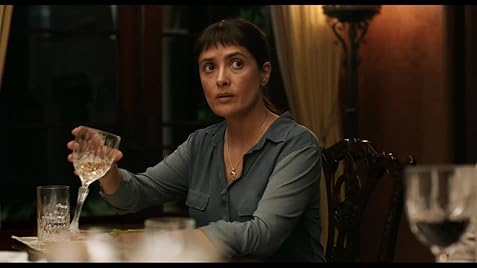
Review: Beatriz at Dinner

Director Miguel Areteta and writer Mike White each have an arsenal full of comedies -- Mike White's works include NACHO LIBRE and SCHOOL OF ROCK, while Areteta somehow furthered his career with comedies after YOUTH IN REVOLT -- but when the two combine, an uncomfortably candid drama unfolds.Though not without its scattering of darkly comedic moments, BEATRIZ AT DINNER is a formidable satirization of the current ambience of political affairs involving immigration issues.

Beatriz (Salma Hayek) is a healer -- soft voice, house full of meaningful trinkets, always seeing the spiritual side of things. She has pet goats.

As the introduction of the film sinks us into her character, Beatriz weaves her way through an opposing worldview, opening a window of spirituality in the lavish home of the elites who pay for her services. One such family is that of Cathy and Grant (Connie Britton and David Warshofsky), whose daughter Beatriz previously worked with to get her through the stages of cancer.

While it is clear that Cathy and Grant grateful for Beatriz's services, the choices they make in their "harmless" but telling dialogue reveal that they value their lifestyle and image more than Beatriz's actual company. When Beatriz's car breaks down in their driveway, Cathy invites her to stay for a dinner they are hosting, and later to spend the night -- an invitation she extends in front of her moneyed peers, of course, who recognize the action as charitable. Here, Beatriz's friendship is convenient -- but that is a facade that will not last the night.

Enter Doug Strutt (John Lithgow). Mr. Strutt is a business executive -- white, male, and abusing his privilege, he hunts animals for enjoyment and has little concern for the welfare of others if it means making an extra buck. His new hotel - the raising of which is the reason behind the dinner - has attracted protestors, and so begins the conversation that triggers a fiery relationship between him and Beatriz, fueled by the haunting of Beatriz's past and an unavoidable butting of heads between two dominant personalities.

The film very expressly makes a statement, not only about prejudices -- the conflicting cultures are so beautifully etched out, and Beatriz's anger at the actions that Mr. Strutt takes is visceral -- but also about the struggle that many minorities find in feeling a sense of belonging. From her position at the peripheral, Beatriz fights hard to find her center. Havek gives a moving performance, balanced well by Lithgow's slimeball affect.


BEATRIZ AT DINNER is now playing at Midtown Cinema! Don't miss this one.

Monday, June 12, 2017

Review: It Comes at Night

If you don't know much about IT COMES AT NIGHT, good. Keep it that way. Watch the film.

The less you know, the better it is, because it's all about the unknown. I will tell you a bit about the plot just to tease you into watching: in a forest in the middle of nowhere, a family has lodged themselves inside their home to avoid a sickness that has struck the outside world. Paul (Joel Edgerton) has built a very structured living situation for his wife, Sarah (Carmen Ejogo) and son, Travis (Kelvin Harrison, Jr.). They board all the windows and doors, only go outside in pairs, and always wear gloves and gas masks when they are outside. They have to do this to remain safe, and keep the sickness out of their home. Then they discover another family living out in the forest, and decide to let them in.

And that's all you get... because to truly appreciate this psychological thriller, you only need to know as much as the characters know. In fact, the film will leave you with a lot of questions -- but that is what makes it such a thought-provoking, upsetting film. It's a story that guarantees to spark conversation, after you process the dark, vividly honest nature of what you just watched.


Every frame of the film beautifully crafts the experience of Travis, who serves as our eyes throughout the majority of the film. It's really one big character sketch, as the family tries to make a life for themselves and bond with each other. 

From the writing to the acting to the decisions behind each shot, IT COMES AT NIGHT will move you. Now playing at Midtown Cinema! Don't miss this film!

Saturday, May 20, 2017

Review: Colossal

It was only a matter of time until writer/director Nacho Vigalondo would try to top his sci-fi thriller, TIMECRIMES... and he may just have succeeded with COLOSSAL, a fun disaster film-turned superhero story.

Gloria (Anne Hathaway) is a wreck. She's broke and without a job, her partying has caused her to become practically nocturnal, and she is the very definition of alcoholic. When her boyfriend kicks her out of their apartment in New York, she returns to her hometown in the middle of nowhere to scrape by in her childhood home, which her parents have left completely empty after moving. Here, she meets childhood friend, Oscar (Jason Sudeikis), who whiles away the time as the sole employee of his departed dad's old bar, and jumps at the exciting opportunity of a flash from the past.

But something strange is afoot. After a drunken night that stretched into the morning hours, Gloria sees on the news that a giant creature has appeared in Seoul, Korea, killing those in its path as it traipsed across the city. The creature appeared once, 25 years earlier --and it seems to be back, appearing every morning at 8:05 exactly, then disappearing into thin air. And Gloria seems to have a strange connection with the mysterious beast...

Hathaway and Sudeikis give strong performances, though it is the characters themselves that shine above anything else: the irresponsible, escapist Gloria that we meet in the beginning of the film gets a hell of a reality check with this kismet experience, and Oscar stoops to desolate levels of manipulation. Putting aside the physical presence of a monster traipsing across cityscapes, this is really a closer look at interpersonal relationships gone awry: what we are really watching is the story of an unwilling and uncertain hero rising from the rubble of alcoholism -- and an antagonist from the pits of self-despair and envy.

Vigalondo offers a nice balance of character development and thrilling heroics in COLOSSAL. Now playing at Midtown Cinema, starting 5/19!

Tuesday, May 9, 2017

Review: The Dinner

When there's dinner, there's drama -- especially when it's amongst family. That is exactly what director Oren Moverman had in mind with his latest film, THE DINNER, adapted from Herman Koch's novel of the same name.

The Lohmans are not the type of family to get together for dinner -- there is too much tension between Paul (Steve Coogan), a history professor struggling with mental illness and with a strong propensity for racism, and his brother, Stan (Richard Gere), who is currently running for governor and can't seem to pull himself away from his work for two seconds. When Stan and his wife, Katelyn (Rebecca Hall), invite Paul and his wife, Claire (Laura Linney), to dine at a local fancy restaurant, Paul can see right through the thinly veiled request and knows that something is up.

He is right -- it seems there is a problem with the two families' sons: Paul and Claire's son, Michael (Charlie Plummer) and Stan's sons, Rick and Beau, have been up to their own mischief -- a deed done in the night without much thought, now coming back to haunt them. As the dinner goes on, and they attempt to devise a plan to deal with their offspring's situation, the tensions rise.

With Paul's off-kilter, sometimes jumbled narration adding a brooding filter to the story, THE DINNER will certainly leave you feeling uncomfortable. The film reveals snippets of likeable traits paired with despicable traits in each character, pulling your emotions every which way as you innately try to connect with one of them. And perhaps that is the thing that makes the Lohmans so despicable: their lives ring so true. If you can't relate with a specific character, bounds are you at least know someone like that.

THE DINNER is an unsettling ensemble character sketch -- one you should be sure to catch. Now at Midtown Cinema, starting on 5/5!

Monday, May 1, 2017

Review: Your Name

While there is certainly a core fanbase for Japanese anime, it is rare to see a film that falls into this category catching the eye of the masses. Such a rare occurrence has occurred with Makoto Shinkai's YOUR NAME, a complex film about a mysterious body swap between two high schoolers.

The story follows Taki Tachibana (Ryûnosuke Kamiki), a city boy in Tokyo, and Mitsuha Miyamazu (Mone Kamishiraishi), a girl living in the countryside. The stark contrast of their lives (not to mention their genders) makes for a compelling opening to a film: both thinking they are dreaming, they live a day in the life of each other without fully comprehending what has happened — and leaving their friends and family under the impression that they have gone crazy, forgetting who they are, where they live, etc. But when the day is done, these high schoolers return to their own bodies. This switch continues to happen intermittently, until the two work out a system, leaving reports for each other on their phones in order to keep track of their lives.


But suddenly, something happens that will change the nature of this bizarre relationship. Comet Tiamat, a comet that appears every thousand years or so, is scheduled to be visible to the naked eye -- a fact which holds much more weight than it appears. Without giving too much away, there is a lot happening in this story that breaks away from your typical body-switching plot-line, and the combination of the gravity of the journey that these two teens take and the deeply ingrained themes of time and spiritual connection makes the film a stark departure from your typical anime.

For those who are not big on anime, the film is still worth a watch, with just a different enough style and feel to the film to attract a wider audience. Though it does have somewhat hokey montage sequences early on in the film, the story, editing, and voice-acting are pretty top-quality. Don't miss this film! YOUR NAME is now playing at Midtown Cinema, starting 4/28.

Monday, March 13, 2017

Review: The Salesman

Asghar Farhadi has won Oscars before -- his film, A SEPARATION, won an Academy Award for Best Foreign Film back in 2012 -- but now his most recent film has granted him Oscar attention yet again. THE SALESMAN, a gripping tale about a struggling marriage after a terrible incident, won the same award this year, and it is easy to see why.

Rana and Emad Etesani (played by Taraneh Alidoosti and Shahab Hosseini) are actors in a local production of "The Death of a Salesman", playing the parts of Willy and Linda Loman. When their apartment building becomes unlivable after the building starts to collapse, Rana and Emad begin to look for another place to stay, all the while nearing the opening of the play. One of their coworkers, Babak (Babak Karimi) offers up an apartment that he was previously renting -- and in which one of the rooms is still locked up, with all the previous tenant's belongings inside.

At first the residual impact of this previous tenant is a mere annoyance, but as more information is revealed, the situation becomes a bit foreboding: it is rumored that the woman was a prostitute, and it seems that she is not happy with the landlord. And then the incident happens: Rana, home alone and about to get into the shower, buzzes a stranger into the apartment, thinking it is Emad at the door -- and ends up in the hospital, a bloody trail left behind in the apartment.

Farhadi is known for lacing his films with difficult situations, and intricate characters -- he tells the tale of Iranian marriage from such an interesting perspective, especially when there are other layers of the story complicating things. THE SALESMAN is a perfect example of this: Rana is in a state of disarray, sifting through a turbulent array of emotions as the victim. She refuses to go to the police because she doesn't want to relive the experience, and Emad struggles in his attempt to soothe and protect her, with conflicting results... She wants him to stay home from work so she won't be alone, but she doesn't want him to touch her. Though her reaction is perfectly natural, Emad becomes frustrated at his wife's emotional withdrawal, and so begins to piece together what clues he has to find the intruder in order to exact some form of revenge. But what exactly that revenge looks like is where Emad falls short: in the end, the justice is less for the victim, and more for himself. There is a strong parallel between him and his Willy Loman counterpart in this self-destructive nature, and the result is devastating and uncomfortable.

The acting in this film is impeccable -- Alidoosti's performance is heartbreaking, and Hosseini sinks into his character's personal vendetta well. Farhadi continues to bring emotional intensity to the screen, and it is not hard to understand why the film won Best Foreign Film at the Oscars this year. THE SALESMAN is now playing at Midtown Cinema!

Saturday, March 4, 2017

Review: Kedi

With all the cat pictures floating around the Internet, it isn't too hard to understand why a documentary about cats is so appealing to audiences. But director Ceyda Torun's film, KEDI, focuses on more than just the cute and fluffy nature of our feline friends -- it focuses on their personality.

KEDI takes us on a journey to Istanbul, where a plethora of cats live, roaming the streets. Seven cats hold the rapt attention of the camera: Sari used to be lazy all day, until she had kittens -- now she makes the rounds, soliciting food to bring back to her children. Then there's Aslan Parçasi, who decided to help a restaurant with its rat problem, and more than pays his keep. Duman is the gentleman, frequenting the nearby deli but never entering -- he just paws at the window when he wants food. Then there's Bengü, the lover; and Deniz, the social butterfly; and Gamsiz, the tough-guy player; and Psikopat, who, true to her name, reigns over her husband-cat more than a little jealously.

As many interviewees throughout the film are so quick to say, these cats are just like people. Different mannerisms, preferences, stubborn streaks, and self-designated purposes make these cats just as human-like as anyone. But it is also, says one Istanbul resident, "like being friends with aliens" -- there is an inability to communicate, and a difference in societal expectations and culture, but there is still a certain closeness and special feeling that people get around cats.

The film slips into a political stance here and there -- some of the interviewees speculate about what will become of the cats when they build the main road through their home -- but for the most part, the focus is all on the cats: their personalities, their symbolism, and their meaning to humankind.

This is a fascinating documentary, which will hold your attention right to the very last minute. KEDI is now playing at Midtown Cinema! Don't miss this feline-tastic film!

Saturday, February 11, 2017

Review: Hidden Figures

Many complain about Oscar Season always doling out depressing films. Still others have objected to the lack of diversity in said films. But director Theodore Melfi's HIDDEN FIGURES, based on Margot Lee Shetterly's novel about three African-American women mathematicians who played vital roles in NASA's space program in the 60s, will scratch that itch -- it's got inspiration and diversity built into every frame of the film. And the story, based off of true events, takes the challenge effortlessly.

The film begins with a young black girl, spouting off mathematic equations while her parents figure out how to provide opportunities for their daughter. After the family's community takes up a collection for the child genius to get her into a good school, we flash forward to the little girl years later -- Katherine Goble (Taraji P. Henson), the soft-spoken mother of three who, in her introduction, sits dreamily in a bright blue STATION WAGON, her two friends outside, trying to fix the broken down vehicle. They are Dorothy Vaughan (Octavia Spencer) and Mary Jackson (Janelle Monáe), and the three of them work as computers at NASA. Unfortunately, convincing someone -- especially a policeman -- that they are not up to trouble on the street, is a task worth fearing... for this is 1962, when segregation still thrives.

The story follows these three African American women as they struggle with the inequalities of their workplace -- breaking free from the computing room where twenty or so black women all work, and into the sea of white, predominantly male employees that make up the rest of the campus. Katherine is assigned to the Space Task Group, the group tasked with managing the manned spaceflight programs, under the supervision of Al Harrison (Kevin Costner), a man who notices very little about his surroundings if it doesn't involve getting NASA to space. For Katherine, this is a job that proves very difficult, as her coworkers seem disinclined to give her any sort of credit or proper clearances, not to mention the fact that she has to go to the other side of campus just to use the bathroom reserved for "colored people". Meanwhile, Mary dreams of becoming an engineer, but is obstructed by the law from taking the classes she needs to get there; and Dorothy does the job of a supervisor in a work environment that refuses to pay for a supervisor.

As these three women pursue their objectives, we see the active deconstruction of the racist and sexist perceptions that mid-century America still had ingrained in its society. The story remains as faithful to the original story as possible, barring cinematic techniques that keep the film at a palatable 127 minutes. And while true stories tend to be embellished to elevate their inspiration, this one doesn't have to change much at all. There are certainly facts throughout the film that stretch the truth a little bit -- Al Harrison, for example, was not a real person, but a fictionalized composite of three NASA directors at Langley at the time -- none of whom ever took down a bathroom sign. And while our three protagonists certainly interacted with each other, they didn't drive to work together every day. But regardless of their carpooling situation, they will still make your heart soar with the leaps they take on screen. As Mary's husband says at one point, "Civil rights ain't always civil", but these women aim to change that, taking strides for themselves and, consequentially, for the rest of the African-American community.

Henson, Spencer, and Monáe dominate the screen with such natural grace, filling in the nuances of their characters with ease. I could have watched an entire series with these characters -- let's hope Octavia Spence wins that Oscar. And the cast has many accommodating supporting roles, like Kirsten Dunst and Jim Parsons in their roles as prejudiced NASA employees. There's even a short-but-sweet performance by Glen Powell as John Glenn. The film is a great example of a beautiful story paired with spot-on casting, and it really goes a long way.

If you're looking for a feel-good movie to scoop you up amidst a slew of more sobering Oscar nominations, HIDDEN FIGURES is your best bet. Now playing at Midtown Cinema!

Monday, January 30, 2017

Review: Jackie

It is not often that you get to see a behind-the-scenes look at politic figures, especially that of a presidential family. But one of this year's Oscar nominations allows just that.

The film is director Pablo Larraín's first English-speaking feature, though it is not the first to have a political tinge. With previous films like NO, and the more recent NERUDA, JACKIE nestles nicely into an array of films that take a closer look at the people involved in political affairs. Taking place one week after the assasination of John F. Kennedy in 1963, previous First Lady, the film follows Jackie Kennedy (Natalie Portman) as she gives an interview (conducted by Billy Crudup as the unnamed Journalist) in her home on Cape Cod.

Through flashbacks, we see Jackie's interactions with all of her close acquaintances - her body guard; Nancy Tuckerman, Jackie's personally chosen Social Secretary (Greta Gerwig); her brother-in-law, Bobby Kennedy (Peter Sarsgaard); Lyndon B. Johnson (John Carroll Lynch); and her children, Caroline and John, Jr. (Sunnie Pelant, Aiden/Brody Weinburg). Each interaction is full of emotion, and each interaction shows the various shades of Jackie Kennedy and her grief.

There are two threads that run through the film: one is the comparison that Jackie makes at great length of Abraham Lincoln -- of his status and memory, as well as the circumstances of his wife after his assassination -- to her husband and her.

The next thread ties in with the first, and that is the impact that the Kennedys had on the United States. Reflecting on a term cut short, Jackie and Bobby discuss: "What did we accomplish?" Bobby asks, "We're just the beautiful people." This worry of making an impact makes sense when paired with the focus on Lincoln. What Jackie seems to want most in this interview is to preserve her husband's reputation.

Portman's performance is a rich amalgamate of stern adamancy, uncertainty, and the contrast between unfettered and composed grief. JACKIE really allows you to tap into these characters' lives and see behind the curtain of politics. Sarsgaard's speech toward the end of the film fills out the family's ordeal. JACKIE is now playing at Midtown Cinema - don't miss this one!

Sunday, January 22, 2017

Review: 20th Century Women

Just in time for the inauguration, Mike Mills' 20TH CENTURY WOMEN hits theaters with a quiet shake of conventions. With its progressive themes and endearing characters, the semi-autobiographical film speaks volumes to this currently churning continent -- though it takes place in the 1970s, it is still thoroughly relatable today.

The story is narrated intermittently by its core characters, though the lead is taken by Jamie (Lucas Jade Zumann), who describes the women in his life who formed and influenced him. There is Dorothea (Annette Bening), Jamie's free-spirited single mother with an unfinished house and an internal struggle between autonomy and control; and then there is Abbie (Greta Gerwig), the punk-rock, 20-something photographer recovering from cervical cancer who rents a room in the house. And there is Jamie's best friend, Julie (Elle Fanning), who climbs the scaffolding to Jamie's room to sleep in his bed and just talk -- they never have sex, though she is freely exploring that realm with other boys.

In a household where freedom and autonomy is number one, Dorothea begins to worry as Jamie reaches his rebellious stage. She asks Abbie and Julie to help her raise Jamie to become a man -- a job which, she protests, does not need to be done by a man. What follows is a lovely, meandering story about chosen family, and feminism, and growing up.

20TH CENTURY WOMEN is light on the plot and heavy on the characters, making it a breeding ground for talent. Bening is a jewel, as usual, and Fanning and Gerwig give arguably their best performances to date. Zumann's performance is assuring, and hopefully he'll get some more roles thrown his way in the future. And Billy Crudup also gives a great performance as the other boarder in the house, the quiet but straightforward William who is helping Dorothea finish her house. The cast feels like a family, and that is what drives the story so deep into our hearts.

This is a great film, one to catch before other Oscar nominees crowd it out. 20TH CENTURY WOMEN is now playing at Midtown Cinema!